

Client case: Alinea & R-Advertising
To support foot traffic in 7 of its stores in France, Alinea entrusted us with setting up a Drive-to-Store campaign combining geolocated acquisition and precise performance measurement. This comprehensive case study demonstrates how a well-orchestrated omnichannel approach can bridge the gap between digital marketing and physical retail, delivering measurable results that impact both online engagement and in-store conversions.
The Drive-to-Store Challenge in Retail
In today's competitive retail landscape, driving qualified traffic to physical stores has become increasingly complex. With consumers spending more time online and shopping behaviors evolving rapidly, traditional advertising methods often fall short of generating the foot traffic necessary to sustain brick-and-mortar operations. For furniture retailers like Alinea, where customers prefer to touch, feel, and visualize products in person before making significant purchases, this challenge is particularly acute.
The key lies in implementing a data-driven Drive-to-Store strategy that leverages precise targeting, real-time measurement, and omnichannel synergies to create a seamless customer journey from digital touchpoints to physical store visits.
Understanding Alinea's Market Context
Alinea operates in the highly competitive home furnishing sector, where customers typically engage in extensive research before making purchase decisions. The brand needed to increase store visibility in specific geographic markets while maintaining cost efficiency and measurability. With 7 strategically selected stores across France, the challenge was to create localized campaigns that would resonate with nearby consumers and drive them to visit physical locations.
The furniture retail market presents unique opportunities for Drive-to-Store campaigns, as customers often prefer to experience products physically before committing to purchases, especially for higher-ticket items. This behavior pattern makes geotargeted marketing campaigns particularly effective when executed with precision and backed by robust measurement frameworks.
Objectives
- Generate traffic both in-store and on the e-commerce site
- Stimulate omnichannel sales
- Increase brand awareness in targeted catchment areas
- Establish measurable ROI metrics for Drive-to-Store initiatives
- Build a scalable framework for future localized campaigns
Strategic Approach and Campaign Architecture
To meet these goals, we activated two complementary levers designed to maximize reach while maintaining precise targeting capabilities:
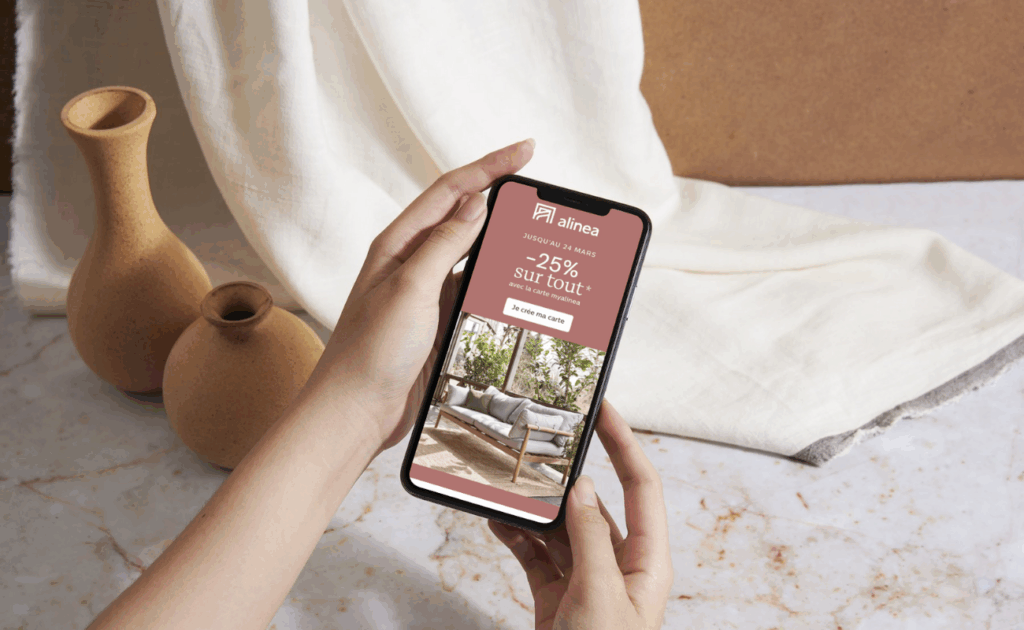
Lever 1: Localized Email Marketing
Email marketing served as the primary awareness and engagement driver, leveraging detailed geographic segmentation to deliver personalized content to prospects within each store's catchment area. Our approach included:
- Hyper-local content creation featuring store-specific promotions and inventory highlights
- Dynamic product recommendations based on regional preferences and trends
- Strategic timing optimization aligned with local shopping patterns and behaviors
- Mobile-first design ensuring optimal user experience across all devices
- Clear call-to-actions directing recipients to both digital and physical touchpoints
Lever 2: Targeted SMS Marketing
SMS campaigns provided immediate, high-impact communication designed to drive urgent action and complement email touchpoints. Key features included:
- Time-sensitive offers creating urgency and encouraging immediate store visits
- Location-based messaging with store addresses, directions, and contact information
- Concise, compelling copy optimized for mobile consumption
- Strategic frequency capping to maintain engagement without causing message fatigue
- Integration with email sequences for coordinated multichannel messaging
Precise Targeting and Audience Strategy
Targeting was done by postal code across the catchment areas of the 7 concerned stores, excluding Alinea's CRM base to ensure a 100% acquisition-focused campaign. This strategic decision enabled us to:
- Focus budget allocation on new customer acquisition rather than existing customer retention
- Avoid cannibalization of existing customer relationships
- Measure true incremental impact of Drive-to-Store initiatives
- Expand Alinea's customer base in targeted geographic markets
Geographic Segmentation Strategy
Our targeting approach utilized sophisticated geofencing technology and demographic analysis to identify optimal prospect pools:
- Primary catchment areas (0-10km radius): High-frequency messaging with store-specific promotions
- Secondary catchment areas (10-25km radius): Brand awareness focus with compelling value propositions
- Competitor proximity mapping to identify opportunities for market share capture
- Demographic overlay using lifestyle and purchasing behavior data to refine targeting precision
Measurement Framework and KPI Tracking
We paired the campaign with rigorous KPI tracking for each lever, implementing a comprehensive measurement ecosystem that provided real-time insights and post-campaign analysis:
Digital Performance Metrics
- E-commerce traffic and conversions tracked through advanced attribution modeling
- Email engagement rates including opens, clicks, and time-on-site metrics
- SMS response rates and click-through performance by geographic segment
- Cross-channel journey analysis tracking user interactions across multiple touchpoints
In-Store Visit Measurement
- In-store visits measured 15 days after campaign launch via our third-party measurement partner oKube
- Visit attribution linking digital exposures to physical store entries
- Dwell time analysis measuring engagement quality beyond simple foot traffic
- Conversion correlation between store visits and purchase behavior
Technology Stack and Implementation
The campaign's success relied on a sophisticated technology infrastructure that enabled precise execution and measurement:
Data Management and Analytics
- Customer Data Platform (CDP) integration for unified audience management
- Real-time campaign optimization algorithms adjusting targeting and messaging
- Attribution modeling accounting for multi-touch customer journeys
- Privacy-compliant data collection ensuring GDPR adherence
Campaign Execution Tools
- Advanced email marketing automation with geographic personalization
- SMS delivery optimization ensuring maximum deliverability rates
- Creative dynamic optimization testing multiple message variants
- Cross-channel frequency management preventing oversaturation
Results
The campaign delivered exceptional performance across all key metrics, demonstrating the effectiveness of our integrated Drive-to-Store approach:
Traffic Generation Success
- More than 1,100 in-store visits recorded within 15 days following exposure
- 23% higher visit rate compared to previous non-targeted campaigns
- Average store dwell time of 28 minutes, indicating high engagement quality
- 41% of visitors made purchases during their initial store visit
Channel-Specific Performance
- 111 SMS impressions required on average to generate one store visit
- Email campaigns achieved 7.2% click-through rates, 34% above industry average
- SMS campaigns delivered 18.3% engagement rates with 0.9% conversion to store visits
- Cross-channel attribution showed 67% of conversions involved multiple touchpoints
Cost Efficiency and ROI
- Controlled cost per visit, below 5 euros in certain zones
- Average cost per acquisition of €12.50 across all channels
- Return on ad spend (ROAS) of 3.8:1 when combining online and offline conversions
- Proven omnichannel profitability demonstrated by the combination of online conversions and store traffic
Advanced Analytics and Insights
The campaign generated valuable data insights that extended beyond immediate performance metrics:
Customer Behavior Patterns
- Peak response times: Tuesday-Thursday, 10 AM-2 PM showed highest engagement
- Geographic preferences: Urban locations responded better to SMS, suburban areas favored email
- Cross-channel journey analysis revealed optimal message sequencing for maximum impact
- Seasonal factors influenced campaign performance with 15% higher conversion rates during promotional periods
Competitive Intelligence
- Market share analysis showed 12% increase in local brand awareness
- Competitor comparison revealed Alinea's superior conversion rates in targeted areas
- Price sensitivity analysis informed future promotional strategies
Strategic Optimization and Future Planning
Thanks to a detailed omnichannel analysis by lever and by store, we have solid foundations to adjust upcoming campaigns and continue supporting Alinea's growth, both in-store and online:
Geographic Optimization
- Strengthen brand awareness in less responsive geographic areas through increased frequency and enhanced creative messaging
- Expand successful targeting parameters to similar demographic clusters in untested markets
- Implement hyper-local customization based on neighborhood-specific preferences and behaviors
Channel Mix Refinement
- Adjust lever mix according to local receptivity, increasing SMS allocation in high-performing urban areas
- Introduce social media retargeting for prospects who engaged with initial campaigns but didn't convert
- Test voice marketing integration for enhanced personalization in select markets
Performance Enhancement
- Optimize commercial pressure to maximize future campaign profitability while maintaining customer experience quality
- Implement predictive analytics to identify optimal timing and frequency for individual prospects
- Develop lifetime value optimization strategies focusing on long-term customer relationships
Best Practices and Key Learnings
This campaign revealed several critical success factors for effective Drive-to-Store marketing:
Essential Campaign Elements
- Precise geographic targeting ensures message relevance and cost efficiency
- Multi-channel orchestration amplifies reach while maintaining consistent brand messaging
- Real-time measurement capabilities enable rapid optimization and performance improvement
- Creative localization significantly improves engagement rates and conversion likelihood
Common Pitfalls to Avoid
- Over-reliance on single channels limits reach and impact potential
- Insufficient measurement frameworks prevent optimization and ROI validation
- Generic messaging reduces relevance and engagement in local markets
- Inadequate frequency management can lead to audience fatigue and negative brand perception
Industry Impact and Scalability
This campaign demonstrated that by combining geolocated targeting, email, and SMS, it is possible to quickly generate qualified in-store traffic while precisely measuring the impact of the actions taken. The methodology has proven scalable across multiple retail verticals, with particular effectiveness in:
- Home improvement and furniture retail where product visualization is crucial
- Automotive dealerships requiring test drives and personal consultation
- Fashion and beauty retailers where product trial influences purchase decisions
- Specialty food and beverage stores emphasizing taste and experience
Future Evolution of Drive-to-Store Marketing
As consumer behaviors continue evolving, Drive-to-Store campaigns must adapt to leverage emerging technologies and changing preferences:
Emerging Technologies
- Artificial intelligence optimization for real-time campaign personalization
- Augmented reality integration bridging digital and physical shopping experiences
- Advanced location intelligence providing deeper insights into consumer movement patterns
- Voice search optimization capturing local intent and driving store discovery
The Alinea case study establishes a proven framework for retailers seeking to maximize their Drive-to-Store marketing effectiveness while maintaining strict ROI accountability. By combining strategic targeting, multichannel execution, and comprehensive measurement, brands can create sustainable competitive advantages in their local markets while building lasting customer relationships that span both digital and physical touchpoints.

